Belleek on the Erne
Belleek stands at the western end of the Erne system, close to the border between County Fermanagh and County Donegal. The settlement grew around a crossing and the River Erne, and it is known internationally for Belleek Pottery. For boat owners, Belleek is not simply another inland canal stop: the river here is approaching its outlet toward the Atlantic, and the character of the waterway changes as lake navigation gives way to an estuarine environment. Confirm the current navigation limit and conditions with Waterways Ireland before planning a passage. A properly fitted cruiser cover is especially valuable where wind and rain arrive from open water.
A western navigation with a different feel
The Erne route from Enniskillen through Lower Lough Erne reaches a landscape of islands, headlands and long exposed reaches before Belleek. Distances across the lake can feel longer than a chart suggests when wind is on the bow. Approach planning should include a return option: a forecast that is comfortable for a sheltered departure may be less attractive on the way back. Keep the cockpit clear, secure loose gear and use a cover that can be stowed without becoming a wet bundle.
Belleek's industrial heritage
Belleek Pottery is the town's best-known landmark and reflects a local tradition of working with the river, transport and clay. The built-up settlement is compact, so a visit ashore is a change from the dispersed shoreline scenery of Lower Lough Erne. Historic character does not imply modern boating facilities. Treat published facilities, opening hours and berthing arrangements as matters to verify before departure rather than promises supplied by a town page.
Where lake navigation meets estuary influence
The western Erne has no tidal lock sequence comparable with a coastal harbour, but the downstream setting means boaters should not apply inland-lake assumptions indefinitely. Water levels, wind setup and local flow can affect handling near the outlet and bridges. Current official notices, a chart and local navigation guidance are essential. If continuing toward the coast or using waters outside the inland navigation, obtain the relevant tidal and passage information separately. The distinction between an active inland route and a coastal trip should be explicit in the logbook.
Weather is the main practical variable
Rainfall, low cloud and squalls can arrive quickly in the west of Ireland. On a small cruiser, the difference between a beam wind and a following wind is immediately felt on an open reach. A cover should remain secure without chafing on rails, screens or rubbing strakes. Breathable acrylic reduces trapped moisture during longer moorings, while ventilation remains necessary whatever fabric is selected. Inspect straps after a windy night; a cover that flaps continuously will age at seams and attachment points.
A border location, not a border barrier
Belleek lies beside the boundary between Northern Ireland and the Republic of Ireland, and the Erne itself links communities on both sides. The border is a political and administrative fact, not a reason to treat the water as a single unregulated space. Carry the documents and insurance details required for your boat, check any applicable reporting or local requirements, and distinguish the authorities responsible for navigation and environmental matters. This is a useful discipline for every cross-border cruise.
Practical cover choices for Belleek
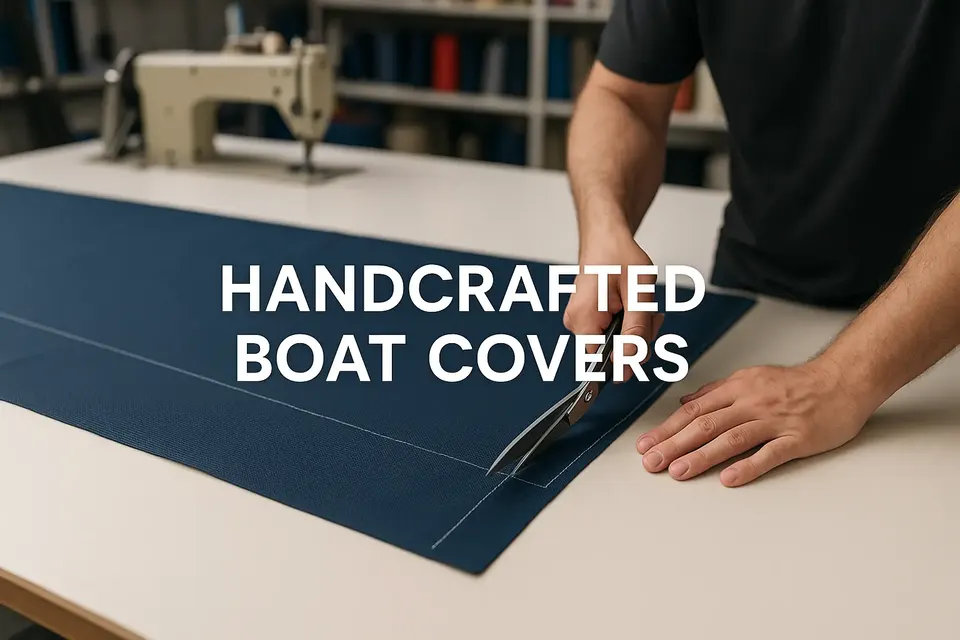
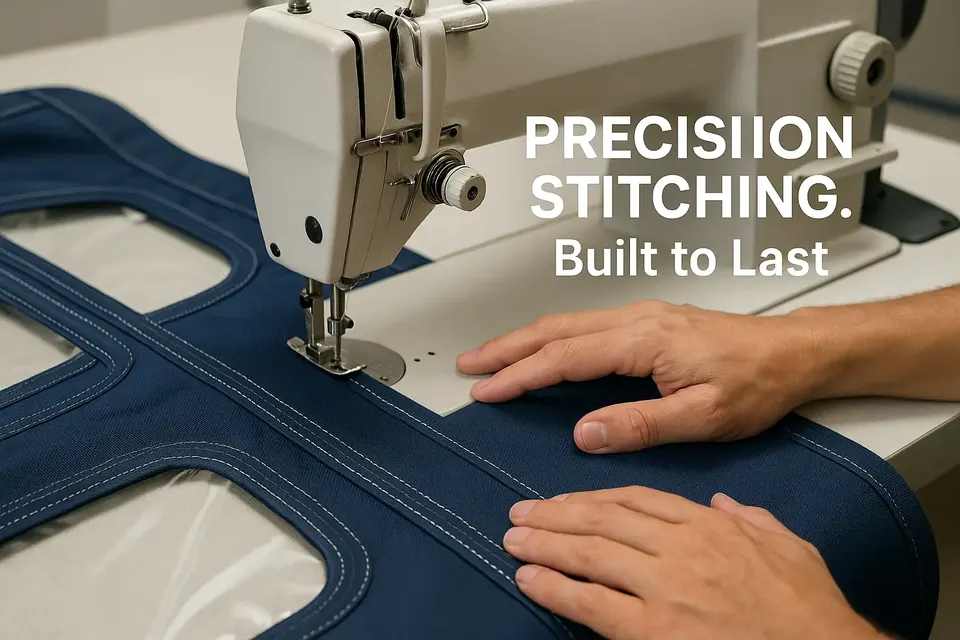
A full canopy can make a cruiser more usable in persistent rain, but it should not obstruct sightlines or make quick access difficult at a landing. A tonneau can be better for a boat that is frequently opened during a short visit. Cratch or forward covers protect ropes and equipment from spray and leaf fall, provided drainage is designed into the shape. Our postal copy service can reproduce an existing cover without bringing the boat to the workshop; measurements and the original template still need to be accurate.
Belleek as an end-of-route decision point
Before making Belleek the destination, verify where the current navigable route ends and whether the intended landing is available to your craft. Do not confuse a historic river passage with a maintained navigation channel. If conditions turn poor, an earlier sheltered stop is often the better seamanship decision. For owners travelling from Enniskillen, the reward is the gradual transition from lake scenery to western river landscape, with Belleek's pottery heritage providing a distinctive shore-side conclusion. Protect the boat, record the passage, and let official notices decide the operational detail.
Before leaving the harbour side
A western destination deserves a deliberate weather check rather than a last-minute look at the sky. Compare the forecast with the return leg, confirm the boat's fuel and battery position, and make sure the cover is stowed dry enough to deploy again. Check that shore access remains available at the intended stop and that the route is within the vessel's capability. Belleek rewards boats that arrive with time to explore, not crews forced to rush because an exposed lake crossing was underestimated.
Final checks before a trip
Plan the actual berth, not only the destination name, and check the latest official navigation notice before moving. Weather, access and waterway status can change independently. Keep the cover dry when stowed, protect its fasteners from unnecessary strain and inspect it after every exposed passage. These habits are straightforward but valuable on a route where active navigation sits alongside historic infrastructure, tidal transitions or cross-border administration. A careful skipper can enjoy the character of the settlement without making assumptions about facilities or navigability.