Whittlesey and the Middle Level: a boat owner's guide
Whittlesey is a useful eastern Fenland reference point for boat owners considering the Middle Level and the River Nene. Its setting combines a market town, low-lying drainage country and routes whose status can change at structures or tidal interfaces. The correct preparation is deliberately unglamorous: current notices, a chart, a realistic air-draught and draught check, and enough time to wait. The landscape is open and apparently uncomplicated, but navigation depends on infrastructure that exists for flood and drainage control as well as boating.
Whittlesey Dyke and the town’s water edge
Whittlesey Dyke is part of the drainage and navigation story around the town, and its name should not be read as a guarantee that every connected length is available for leisure craft. Straight water and low banks make speed deceptively easy to build. Keep the boat settled, especially near moored vessels and vulnerable edges. Use the town as a land-based orientation point, while verifying the legal status of any proposed stopping place. Fenland access can be seasonal, managed or private.
The Nene connection at Stanground
The Middle Level’s important relationship with the River Nene is expressed through the Stanground area near Peterborough. A passage involving Stanground Lock should be planned as a real lock transit, with current operating information and dimensions checked in advance. The Nene is a river navigation, not simply an extension of a drainage cut, and downstream conditions can differ. Allow time for delays and ensure the crew understands who will handle lines before the boat enters the chamber.
A route with two authorities in mind
Middle Level and Nene navigation information may come from different authorities and can change independently. Read both sets of notices when the itinerary crosses the boundary. Confirm whether a booking, key, licence or assisted passage arrangement applies, and keep evidence of any required permission aboard. A historic route description is useful for context but not operational authority. If information conflicts, pause and obtain clarification rather than choosing the most convenient interpretation.
Handling a broad, exposed reach
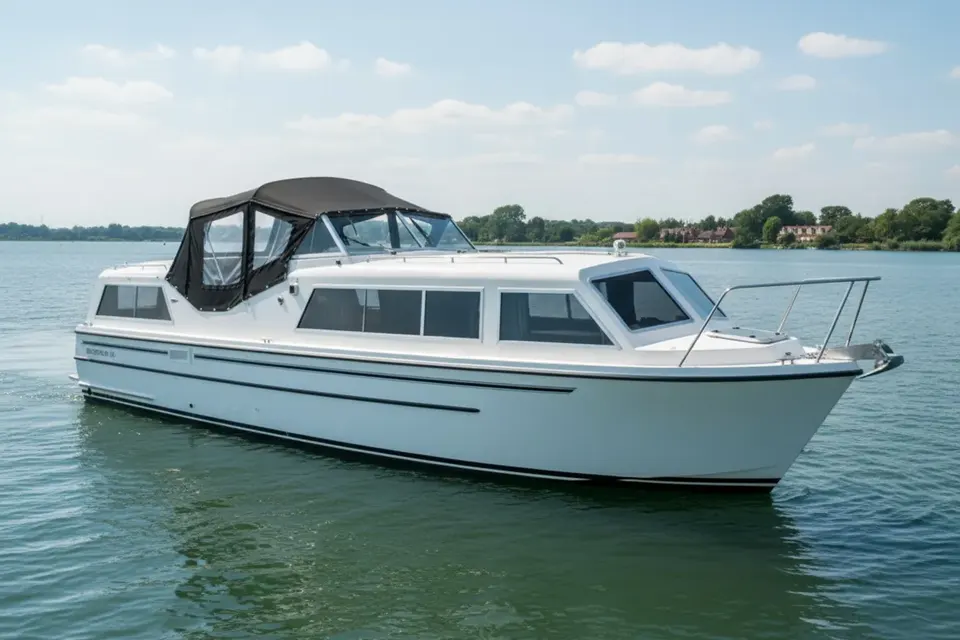
The Fens offer little natural shelter. A crosswind can push a cruiser toward the bank during a turn, while a narrowboat’s cabin profile catches gusts during a landing. Reduce speed early, approach at an angle you can control and avoid using excessive power close to the edge. Have a bow line ready but never wrap it around a crew member. Secure or remove loose covers before manoeuvring so fabric cannot obscure the helm’s view.
Whittlesey as a shore stop
Whittlesey’s town setting gives a trip a useful break from water, with local streets and a strong Fenland identity. Treat any stop as conditional: check mooring signs, respect private frontage and do not obstruct navigation or drainage access. Carry provisions rather than assuming a waterside shop or pump-out is nearby. A shore walk is also a good opportunity to inspect the boat from outside, looking for chafe, loose fittings and water pooling beneath covers.
The weather sets the pace
A bright forecast can bring glare on open water and significant UV exposure to canvas, while a modest breeze can become tiring when there is no hedge or high bank to break it. Rain reduces contrast and makes lockside work slippery. Ventilate the interior after wet passages and dry folded fabric before long storage. In winter, inspect clips and zips for ice before operating them. Good cover care is a navigation habit because a failure at the wrong moment creates distraction.
Planning beyond the local reach
From Whittlesey, onward travel toward the Nene, Middle Level and ultimately other eastern routes needs a sequence of confirmed passages. Mark bridges, locks, tidal sections and likely waiting points on the chart. The most important question is not how many miles can be covered, but where a delay can be absorbed safely. Keep a conservative turning and mooring plan, especially for a first visit. If the boat’s dimensions are close to a published limit, seek confirmation before committing.
Useful cover arrangements for river work
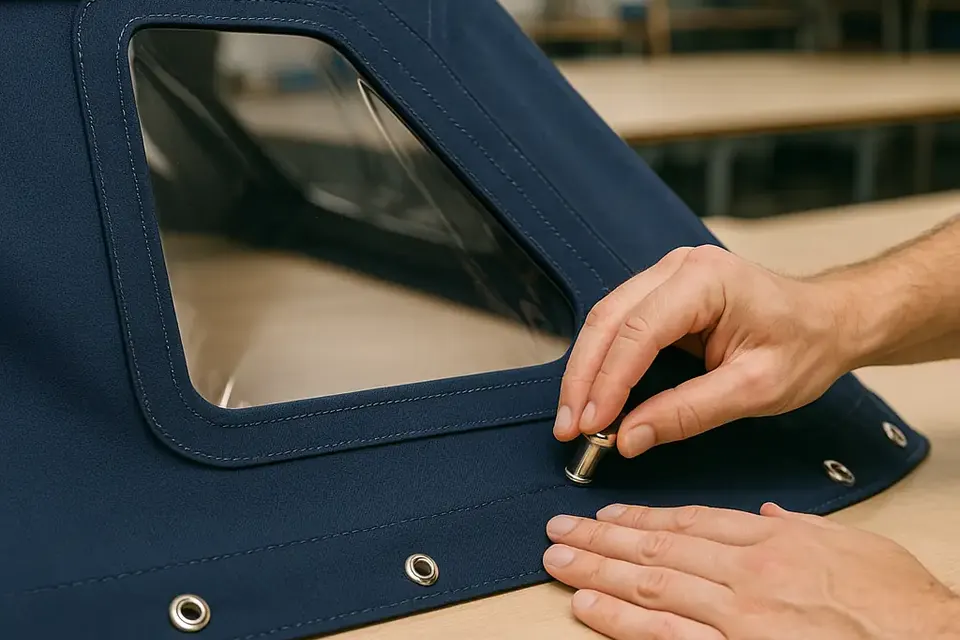
Owners who alternate between open Fenland water and lock approaches often choose separate protection for bow and cockpit rather than one cumbersome full cover. A tonneau can be stowed quickly; a cratch cover shields equipment; a stern canopy can offer shelter while retaining access to the tiller. Every arrangement must preserve sightlines, lights and crew movement. When commissioning a replacement, supply accurate measurements or an existing pattern, and specify the boat’s rails, screens and poles rather than relying on model names alone.
A careful base for exploration
Whittlesey rewards boaters who treat the Middle Level as a managed system. Check official information immediately before departure, respect wash limits and avoid confusing a visible channel with an open route. The result is an enjoyable, spacious journey with an unusually clear sense of place: town, river, drain and engineered control structure all belong to the same Fenland story.
Whittlesey is a sound place to make the Stanground and wider Nene decision carefully, with the boat and crew’s real limits in view.
A practical starting point for replacement work is marine fabrics, followed by the postal copy service and available boat cover services.