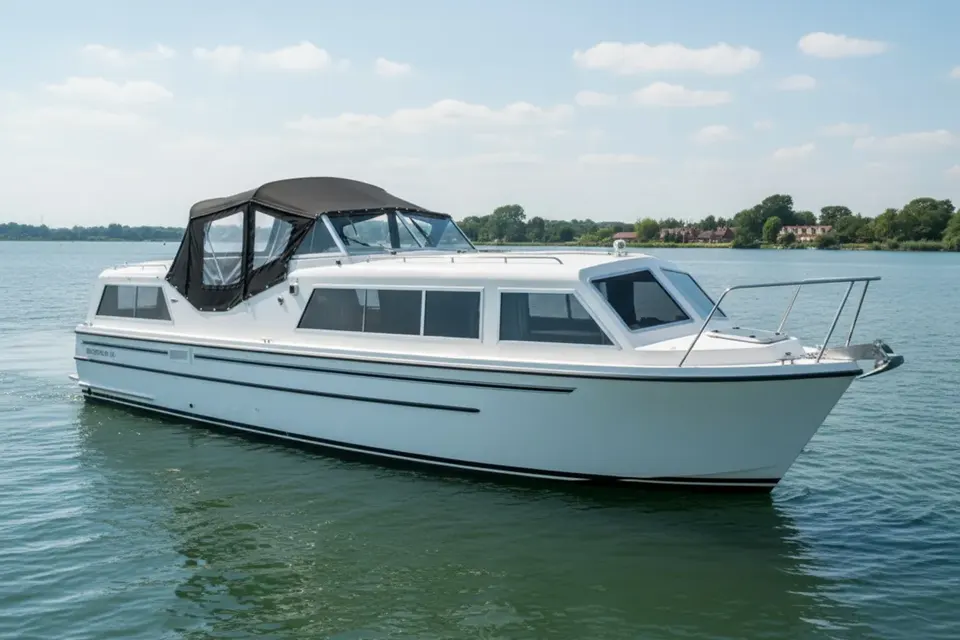
Buscot village sits on the Upper Thames where the river winds through National Trust parkland, creating one of the Thames's most picturesque settings. Buscot Lock and the historic weir create mooring opportunities surrounded by managed landscape and 18th century estate architecture.
Buscot Lock and Weir Complex
Buscot Lock (fall: 4ft 8in) was rebuilt in 1790 when the Thames Navigation was improved. The lock's round pound and stone construction match Radcot's architectural heritage upstream. Alongside, Buscot Weir creates a substantial water feature where the Thames tumbles over stone sills, the rushing water audible from lock moorings.
The lock-weir complex creates varied mooring environments. Sheltered lock moorings sit protected from main river flow, while weir stream moorings experience faster current and increased oxygen levels attracting fish. Our custom boat covers suit both locations through versatile construction managing different water conditions.
National Trust Buscot Park Setting
Buscot Park (National Trust property) dominates the riverside landscape. The estate's 18th century mansion, formal gardens, and parkland create managed countryside contrasting with wild Upper Thames sections elsewhere. Towpaths through the estate provide access to village facilities while maintaining rural character.
This heritage setting creates aesthetic expectations - boats and equipment should complement the historic environment. Our color-matched marine-grade fabrics integrate with the refined Buscot setting, providing protection without compromising visual harmony.
Upper Thames Water Characteristics
The Thames at Buscot maintains Upper Thames shallow-water character. Summer depths reach 4-5 feet in the navigation channel, reducing to 2-3 feet during dry periods. Winter flooding adds 3-4 feet, transforming the river's character from placid stream to substantial waterway.
These water level variations affect mooring security and cover fitting. Our adjustable systems accommodate level changes while maintaining watertight protection. Reinforced stress points handle increased current during floods without cover damage.
Seasonal Navigation Patterns
Buscot experiences Upper Thames seasonal navigation patterns. Summer (May-September) brings peak traffic including boats making pilgrimage to nearby Lechlade. Winter sees reduced movement as water levels drop and weather deters cruising. Spring and autumn provide optimal cruising - moderate temperatures, adequate water, and fewer crowds.
Extended winter mooring at Buscot demands comprehensive cover protection. Six months of Oxfordshire weather requires durable construction preventing degradation. Our covers deliver multi-season performance maintaining protection throughout extended lay-up periods.
Historic Cheese Wharf
Buscot's "Cheese Wharf" recalls Thames commercial transport when barges carried produce to London markets. The wharf (now grassed mooring area) provided loading facilities for local agricultural production. This heritage demonstrates the Thames's historic economic importance beyond modern pleasure cruising.
Boats mooring at Cheese Wharf experience this history firsthand. The wharf's protected position provides shelter from river flow, though exposure to parkland winds demands reinforced cover construction.
Village Facilities and Services
Buscot village itself provides limited services - no shops or pubs exist within easy walking distance. The National Trust tea room at Buscot Park operates seasonally, but comprehensive provisioning requires Lechlade (4 miles upstream) or Faringdon (3 miles overland).
This isolation creates self-sufficient boating requiring quality protective covers reducing maintenance needs. Boats moored here must carry tools, spares, and provisions for extended periods. Our durable covers minimize weather damage reducing service requirements.
Weather and Environmental Factors
Oxfordshire's continental climate creates distinct seasons. Cold winters bring regular frost November-March with occasional snow. Warm summers reach 28-30°C peaks, creating intense UV exposure on unshaded Upper Thames waters. Annual rainfall 680mm falls mainly October-January.
The estate's parkland provides some wind protection through strategic tree planting. However, exposed meadow sections allow westerly gales to sweep across moorings creating wind stress on boats and covers. Our reinforced construction manages these conditions through proven stress distribution.
Wildlife in Managed Landscape
Buscot Park's managed landscape supports different wildlife than wild Thames sections. Formal gardens and parkland create habitat for specific species - jays and magpies in estate woodwork, muntjac deer in undergrowth, ornamental waterfowl on estate ponds.
The Thames itself maintains natural biodiversity - kingfishers, herons, and cormorants hunt the shallows. Otters have recolonized the Upper Thames, occasionally spotted near Buscot. Water voles persist in protected bankside habitats. Boaters share this managed environment through sensitive navigation and secure cover systems preventing wildlife issues.
Boat Types and Local Fleet
Buscot's Upper Thames position suits shallow-draft cruisers typically 20-24 feet. Viking 20 and Norman 20 models prove popular, their moderate size and minimal draft perfect for Upper Thames conditions. Traditional clinker launches maintain heritage aesthetics matching Buscot's National Trust setting.
Day boats visit from downstream marinas for Buscot Park visits and lock photography. Smaller craft including canoes and kayaks launch here for Thames Path expeditions. Each vessel type benefits from protective covers - full canopies for cruisers, tonneau covers for day boats, simple protective sheeting for paddle craft.
Lock Operations and Queuing
Buscot Lock operates seasonally with Environment Agency supervision. Summer brings regular operation though traffic remains modest given Upper Thames quiet nature. Peak summer weekends might see 5-10 boats per day - nothing compared to downstream Windsor or Maidenhead's constant traffic.
Lock queues rarely exceed 10-15 minutes even at peak periods. The modest traffic creates relaxed atmosphere where lock keepers have time for advice and conversation. Covers protect boats during these brief waits while allowing quick access for lock entry.
Distance and Cruising Context
Buscot sits 4 miles downstream from Lechlade (1.5 hours cruising including one lock). Radcot lies 3 miles downstream (1 hour including Grafton Lock). This spacing makes Buscot a natural overnight stop for boats exploring the Upper Thames's quietest reaches.
Multi-day cruises often overnight at Buscot while exploring the Upper Thames. Oxford lies 23 miles downstream (6-7 hours including multiple locks) - a long day's cruise or comfortable two-day journey. The village's position makes it ideal for mid-trip mooring on week-long Upper Thames expeditions.
National Trust Estate Access
Buscot Park (National Trust) offers estate access for NT members and ticketed visitors. The house contains fine art including Burne-Jones's famous "Legend of the Briar Rose" paintings. Gardens feature water gardens, formal terraces, and parkland walks. Boaters can combine river cruising with cultural visits creating varied holiday experience.
The estate's opening season (April-September typically) aligns with main boating season, allowing combined activities. Winter mooring at Buscot means limited estate access though the parkland's visual beauty remains year-round.
Future Conservation
National Trust ownership ensures Buscot's future preservation. Estate management maintains landscape character while accommodating public access including river navigation. Recent towpath improvements and mooring enhancements demonstrate NT commitment to waterway heritage.
Environment Agency maintains Buscot Lock and weir ensuring continued navigation. Lock refurbishment and regular weed management keep the Upper Thames open for pleasure cruising. This institutional commitment supports continued investment in quality boat protection for the Buscot fleet.
Our postal copying service serves Buscot's Upper Thames location. Send existing covers for reproduction with improved materials and fixings. Dispatch timing agreed before ordering ensures quick return to this National Trust riverside gem where 18th century parkland frames timeless Thames waters.