Tiverton and the Grand Western Canal
A western gateway with a precise limit
Tiverton is the southern, or western, terminus of the navigable section of the Grand Western Canal. Devon County Council describes the country park as an 11¼-mile waterway running from Tiverton Canal Basin through Halberton, Sampford Peverell and Burlescombe to Lowdwells, close to the Somerset border. That makes Tiverton a useful base for understanding the canal, but not a starting point for a through cruise: this is an isolated canal, not a navigable link to Taunton or the national canal network.
The basin is reached from Canal Hill and sits beside the town. It is the most recognisable concentration of canal heritage in Tiverton, while the towpath gives walkers and cyclists a continuous way to read the waterway’s line eastwards. For an owner, the important distinction is between a country-park visit, permitted boating and an ordinary inland-waterway cruising itinerary.
What “navigable” means here
The authority’s boating information classifies the Grand Western as a Category A, wide canal. It is completely lock-free and has one lift bridge. The stated height restriction is just under two metres, so air-draught needs checking before a boat is brought to Tiverton. The canal is not tidal, and there is no tidal passage to plan at the basin. Instead, access and use depend on the local authority’s permit system and its rules.
A Canal & River Trust or British Canoeing permit is not valid here. Motorised boaters should read the Grand Western permit conditions and navigational notes rather than assume that a national-canal licence applies. That is especially important for owners arriving from elsewhere: the water’s historic association with the Somerset and Devon canal system does not make it physically connected to the currently navigable network.
The basin’s working memory
The Grand Western was built as part of a route intended to carry goods across Devon and Somerset. Its history changed sharply when the eastern section from Taunton to Lowdwells was sold and abandoned in 1865. The surviving canal continued to serve the limestone trade until leaks led to a dam being formed near Halberton in 1925. It then fell largely out of use, apart from a local lily-harvesting business, before twentieth-century preservation work secured the surviving waterway.
That story is visible in the basin’s scale and in the canal’s surviving structures. The present country park is a restored historic waterway and recreational landscape, not a commercial freight canal. Owners should therefore treat the heritage setting as part of the navigation: keep wash modest, follow local instructions and avoid assuming that every historic feature is designed for modern craft.
Tiverton’s practical starting point
The Canal Basin is the clearest place to orientate before a permitted trip. Devon’s visitor information identifies a visitor centre, car park, toilets, cafés and boat-hire facilities there, alongside the Ranger Service offices and the horse-drawn barge operation. Those are visitor facilities, not a guarantee of engineering, fuel, pump-out or overnight mooring services for private craft. Check current arrangements with the canal authority before travelling with a boat that needs support.
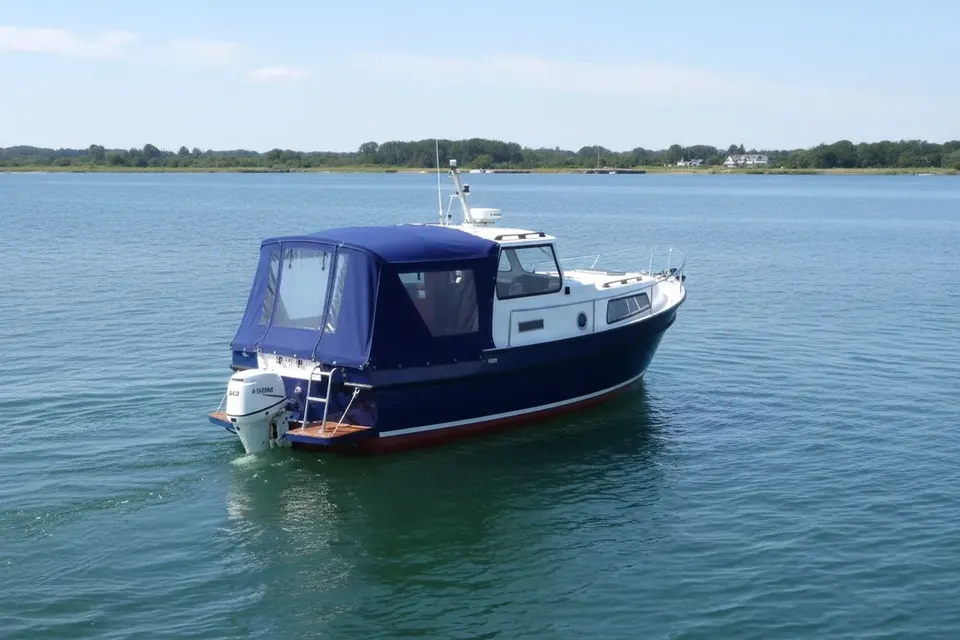
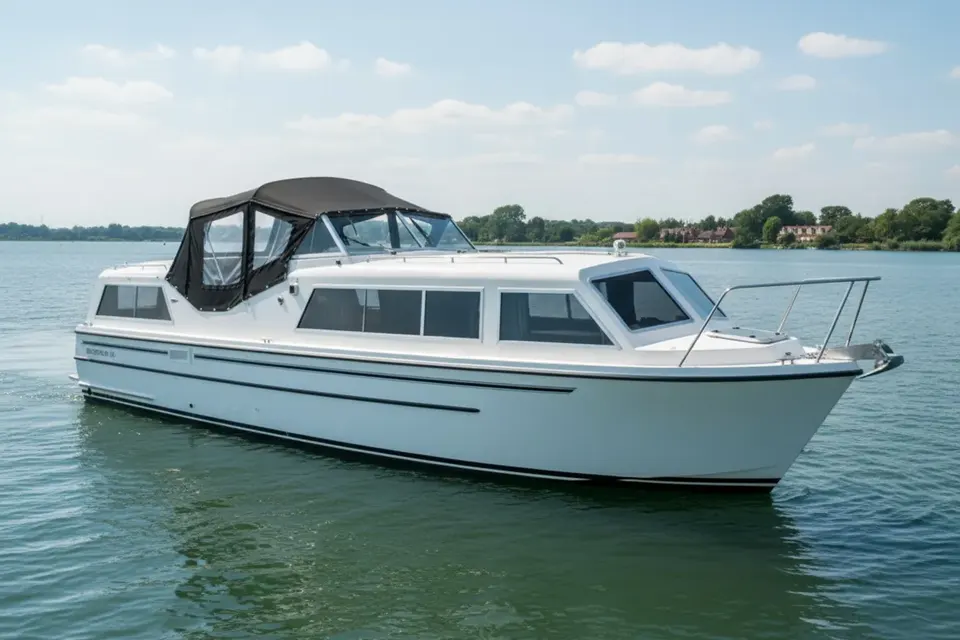
The first miles are particularly accessible as a towpath experience, with bridges and parkland giving frequent points at which to pause and assess the low, broad channel. A cover that can be removed without a struggle is sensible on a waterway with a lift bridge and a height limit; a permanent, high canopy may turn an otherwise straightforward permission into a clearance problem.
Towpath, wildlife and water etiquette
The canal is managed as a country park and local nature reserve, with woodland, hedgerows, open water and ponds. Wildlife is not an incidental backdrop. Devon’s guidance asks visitors to respect wildlife and take extra care around swans, particularly in spring and early summer when birds may be guarding nests or young. A boat owner should allow room, reduce speed and be prepared to stop safely rather than press through a narrow encounter.
The flat surfaced towpath is a strong feature for crew logistics: a companion can walk ahead, check a bridge or meet the boat at a permitted access point. It is not a substitute for official navigation advice, however, and towpath users have priority as people enjoying the park. Keep lines, fenders and covers tidy so they do not obstruct the public route.
A cover brief for an exposed, quiet canal
Tiverton’s inland climate brings rain, damp air, leaf fall and periods of bright sun. A breathable fabric can help manage condensation when a boat is left covered, while secure fastenings matter more than decorative extras on an open country-park reach. Avoid allowing fabric to rub against rails or fittings, and make sure water can run off rather than pool.
The lack of locks reduces repeated handling compared with a flighted canal, but the lift bridge and low clearance still make a compact arrangement worthwhile. A bespoke boat cover can be shaped around the actual rails, cockpit and access points rather than a generic outline. Owners comparing fabrics can also use the practical guidance on boat-cover materials.
Planning beyond Tiverton
Do not describe the Grand Western as a through route to Taunton. The restored, water-filled section ends at Lowdwells near the Somerset border; the former continuation is historic rather than an active navigation. Halberton and Sampford Peverell are useful settlements along the same canal, but they do not represent separate connected waterways or alternative access points.
For a replacement cover, the postal copy service may be useful when moving a boat to a workshop is impractical: the existing cover provides the pattern, while the owner remains responsible for checking that its shape still suits the present boat. On this distinctive, permit-controlled canal, accurate local knowledge is more valuable than claims about facilities that have not been confirmed.