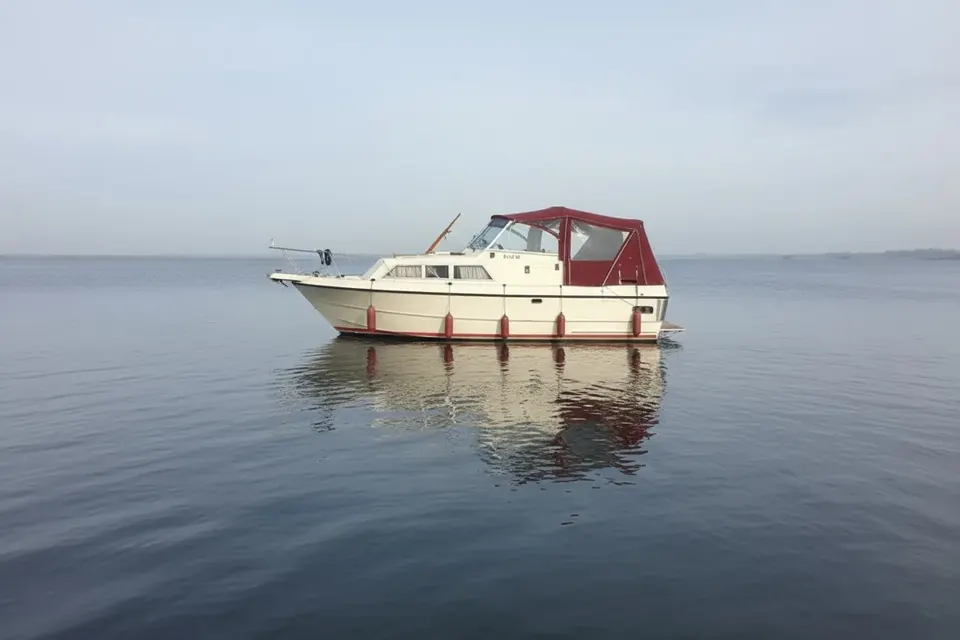
Halberton beside the Grand Western Canal
A village reach between basin and border
Halberton lies on the central portion of Devon County Council’s Grand Western Canal Country Park. The whole surviving waterway runs for 11¼ miles from Tiverton Canal Basin to Lowdwells near the Somerset border, passing Halberton, Sampford Peverell and Burlescombe. Halberton is therefore a useful midpoint for a towpath walk or a permitted boating excursion, but it is not a marina district or an independent navigation entrance.
For boat owners, the settlement’s value is its position. It helps divide a long, quiet reach into manageable sections and makes the canal’s interrupted history easier to understand. The canal here is a restored historic waterway managed as a country park, with modern recreation sharing space with wildlife and surviving engineering.
Read the rules before launching
The Grand Western’s official boating guidance calls it a Category A wide canal. It has no locks and one lift bridge, and the published height restriction is just under two metres. There is no tidal section around Halberton: water levels and clearance are local canal matters, not tide-table matters. Nevertheless, the absence of locks should not be mistaken for unrestricted access.
Motorised boating requires the relevant Grand Western permit, and the authority supplies navigational notes and rules with that permission. British Canoeing, Paddle UK or Canal & River Trust permits do not apply. Check the current terms before arrival, including where launching, mooring or shore access is allowed. Historic canal maps cannot replace present-day instructions.
Why the canal stops where it does
The Grand Western once formed part of a larger west-country transport ambition. Its eastern section between Taunton and Lowdwells was sold and abandoned in 1865 after trade declined. The remaining section stayed open for limestone traffic until persistent leaks led to a dam near Halberton in 1925. It was subsequently left unused for many years, except for a local lily-harvesting business, before campaigns in the 1960s helped prevent further loss and led to restoration.
That chronology matters at Halberton. The waterway’s continuation towards Somerset is historic and discontinuous, not an active route for a modern boat. A visitor can follow its story across the landscape, but should not plan a passage beyond Lowdwells as though this were a canal junction. The restored reach is the operational fact; the abandoned route is heritage context.
A calm place to manage a crew
A lock-free canal changes the rhythm of a trip. There is no flight requiring a lock-wheel routine, water-saving sequence or repeated line work. A crew can concentrate on clearance, steering, wildlife and courteous passing. One lift bridge remains a practical feature, and the under-two-metre height limit makes a folding or removable canopy more useful than a tall fixed structure.
The towpath provides a parallel route through the country park. Devon’s visitor material lists picnic locations at several points, including Sampford Peverell and Whipcott Bridge, but those references should not be read as promises of boat services or private moorings. Use signed public facilities and confirm any water-based arrangements with the ranger service.
Country-park navigation, not private waterside development
Halberton’s canal edge is shaped by the park’s mix of open water, ponds, hedgerows and woodland. The management setting brings responsibilities that would be just as important in a nature reserve as on a canal: minimise wash, avoid disturbing birds and keep equipment from spreading onto the towpath. Devon specifically highlights care around swans in the nesting season. Slow, predictable handling is safer than trying to squeeze past wildlife.
The quiet character can also expose a weak cover. Wind across an open field, rain collecting in a sagging panel and damp trapped below an impermeable fabric are ordinary maintenance problems, not evidence of a special local facility. Inspect attachment points after each trip and dry a cover before folding it away.
Halberton’s cover considerations
A boat on the Grand Western may spend much of its time at rest, with occasional permitted outings. That favours a cover that is weather-resistant yet manageable by one or two people. Breathability helps reduce condensation; reinforced corners and properly placed straps reduce flapping. Around a low-clearance bridge, the arrangement must come down cleanly and stow securely without fouling the helm.
The guide to choosing boat-cover fabric explains the trade-off between waterproofing, breathability and UV resistance. A tailored canopy or tonneau cover can preserve access to controls and seats while avoiding unnecessary height. Do not copy a cover’s faults automatically: when using a postal copy service, tell the maker about changed rails, fittings or cockpit arrangements.
What Halberton is—and is not
Halberton is not a tidal port, a through route to the Bridgwater or Taunton navigation, or a confirmed service centre. It is a village beside the restored middle stretch of the Grand Western, within a Devon-managed country park. The sensible preparation is therefore modest: secure the required permit, check the current authority notices, measure air draught, protect the boat from damp and sun, and plan around the one lift bridge.
That approach leaves room to appreciate the canal’s real character. Halberton offers a measured stop in a landscape where restoration, wildlife management and boating coexist, rather than a cluster of invented amenities. Treat the route honestly and the village becomes one of the best places to understand why this surviving section was worth saving.