Mapledurham preserves Thames estate village character unique among surviving river settlements. The Blount family's continuous ownership since 1490 created architectural unity across house, watermill, church, and cottages - all maintaining Elizabethan and Stuart styling creating Thames's most cohesive period village. The watermill, mentioned in Domesday Book 1086 and still grinding corn commercially, represents England's last operational watermill on Thames, contributing working heritage atmosphere rare in modern Britain.
Mapledurham Lock and Estate Control
Mapledurham Lock's fall of 7ft 3in makes it among Thames's deepest locks in this river section, with chamber construction reflecting Victorian engineering standards. The lock sits immediately below Mapledurham estate buildings, with watermill visible from lock approach creating picturesque scene attracting photographers and artists for generations.
Estate ownership affects lock environment. Mapledurham House grounds extend to river banks, with lock keeper's cottage and facilities integrated into estate architecture. This unified ownership creates maintained Thames frontage contrasting with piecemeal development elsewhere. Lock gardens receive estate attention, towpath maintenance exceeds typical standards, even lock gates feature decorative ironwork reflecting estate quality expectations.
Lock operation follows standard Thames patterns with keeper service during main season. However, Mapledurham's position between Reading (4 miles south) and Pangbourne (3 miles north) creates moderate rather than heavy traffic. Queue times rarely exceed 20 minutes even summer weekends, with midweek passage often immediate.
Our bespoke boat covers suit Mapledurham's estate environment through appearance matching architectural quality. Covers visible from estate house and church should maintain standards befitting this historic setting - we provide color coordination and professional finishing appropriate to England's premier Thames estate village.
Mapledurham Watermill - Domesday Heritage
The watermill recorded in Domesday Book 1086 operated continuously for nearly 900 years, with current building dating to 15th-century reconstruction retaining medieval mill machinery. The mill's working status (grinding organic flour commercially) distinguishes it from museum exhibits - this represents living industrial heritage where machinery built centuries ago continues productive work.
Mill operation affects river environment through weir management maintaining mill pool water levels. The weir's construction creates distinctive current patterns - strong flow through weir channels, calmer water in mill pool itself. Boats approaching Mapledurham Lock benefit from understanding these currents, with mill pool offering sheltered mooring for vessels awaiting lock passage.
The mill's architectural prominence - timber frame structure visible from considerable distance along Thames approaches - provides navigation landmark confirming Mapledurham location. Combined with Mapledurham House's distinctive Elizabethan styling and church tower, the mill completes architectural ensemble creating unmistakable village identification.
Boats moored near the mill experience distinctive soundscape - water rushing through mill race, occasional machinery operation when grinding flour, otherwise rural quiet broken only by birdsong and wind through willows. This working heritage atmosphere attracts boaters seeking authentic Thames character beyond commercialized tourist destinations.
Mapledurham House Estate Character
Mapledurham House, built 1588 for Blount family, represents rare surviving Elizabethan manor maintaining original Thames estate setting. The house's brick architecture, formal gardens, and riverside position create Thames's finest estate ensemble. Unlike stately homes converted to hotels or divided into flats, Mapledurham remains private family residence (though offering limited public access), preserving atmosphere of working estate rather than museum.
This estate character extends to Thames mooring policies. Limited visitor berths maintain exclusive environment - perhaps 4-6 overnight visitors maximum across all Mapledurham moorings. Estate prefers boats matching environmental quality standards, with well-maintained traditional cruisers welcomed while poorly-kept vessels encouraged to moor elsewhere.
For boaters securing Mapledurham mooring, the experience offers Thames's most exclusive overnight stop - mooring before Elizabethan manor house, within sound of working medieval watermill, surrounded by maintained estate parkland. This privilege demands respectful behavior and boat presentation, with covers contributing to overall aesthetic through professional appearance.
Filming Location Heritage
Mapledurham achieved cinema recognition through "The Eagle Has Landed" (1976) filming, where estate house and grounds portrayed English country manor central to plot. The film's commercial success brought Mapledurham to international attention, though estate management maintained privacy preventing over-exploitation.
This filming heritage attracts cinema-interested boaters seeking locations from classic British films. The estate's willingness to permit filming (under controlled conditions) demonstrates Blount family's approach - selective commercial engagement preserving rather than compromising heritage character.
Additional filming projects have used Mapledurham periodically, always maintaining strict control preventing disruption. For boaters, this means moorings remain peaceful despite occasional film crews - estate management ensures commercial activity never overwhelms residential character or disturbs traditional Thames atmosphere.
St Margaret's Church Integration
St Margaret's Church completes Mapledurham's architectural ensemble, its medieval tower and Victorian restoration harmonizing with house and mill. The church's estate ownership creates architectural coordination across all three major buildings - unified brick and flint construction, complementary roof pitches, coordinated maintenance standards.
Church position on rising ground provides visibility from Thames approaches downstream. The tower's outline against skyline confirms Mapledurham location before lower mill and house come into view. For boaters navigating between Reading and Pangbourne, church tower provides reassuring position confirmation.
Church bells pealing for Sunday services contribute to Mapledurham's timeless atmosphere. Boats moored overnight Saturday experience Sunday morning bells calling villagers to worship, continuing patterns established centuries before internal combustion engines brought modern cruisers to these historic Thames waters.
Boat Types Suited to Estate Moorings
Mapledurham attracts quality boats befitting estate environment. Traditional wooden launches predominate - varnished mahogany cruisers maintained to high standards by owners appreciating architectural heritage. Modern GRP cruisers appear less frequently, though well-kept examples receive welcome when owners demonstrate respect for setting.
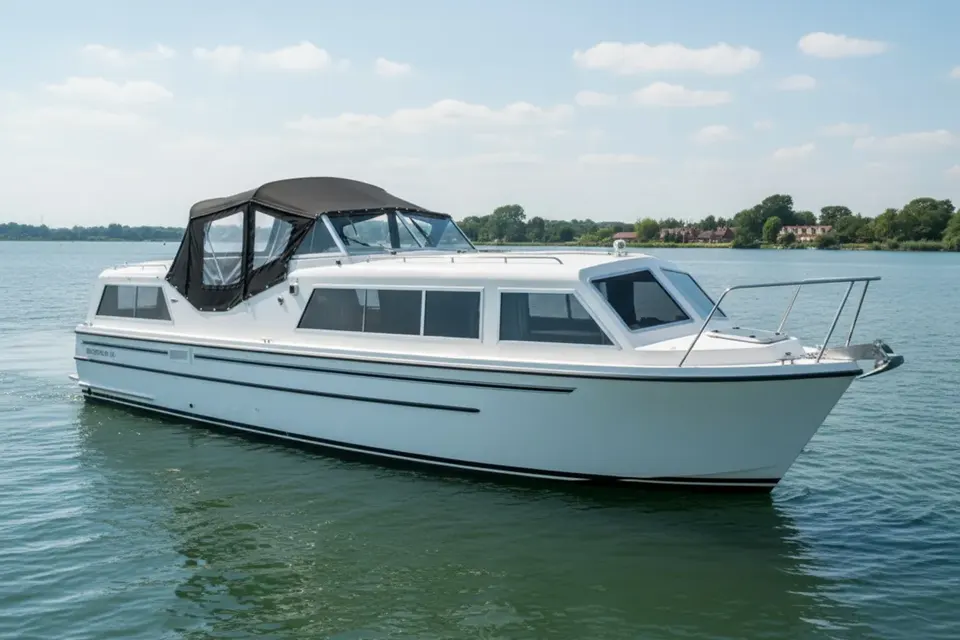
Seamaster 30 models suit Mapledurham's character through classic styling and reputation for quality construction. These 30-foot cruisers provide comfortable accommodation for extended stays while maintaining appearance standards appropriate to estate moorings. Norman 27 cruisers appear regularly, their traditional lines complementing Mapledurham's period architecture.
Viking 26 boats suit serious boaters using Thames for actual navigation rather than floating accommodation. These seaworthy cruisers' practical design appeals to boaters appreciating Mapledurham's heritage without requiring decorator-showpiece vessels. Well-maintained Vikings receive warm welcome at estate moorings.
Classic wooden boats find natural home at Mapledurham. Restored vintage launches and maintained period cruisers harmonize with estate character, their varnished brightwork and traditional styling matching architectural quality. These heritage boats need covers protecting irreplaceable woodwork from UV degradation and weather damage - we provide traditional styling using contemporary technical fabrics delivering superior protection with period-appropriate appearance.
Weather Conditions and River Environment
Mapledurham's Thames Valley position creates specific microclimate affecting boat protection. The estate's parkland provides some shelter from prevailing westerlies, with mature trees reducing wind exposure compared to open agricultural sections. However, the river's north-south orientation through Mapledurham exposes moorings to downstream winds funneling through Thames gap.
Summer brings intense southern England sun. Boats moored at Mapledurham's unshaded berths receive direct exposure throughout long June-July days, demanding superior UV-resistant marine-grade fabrics. Our PVC-coated polyester includes commercial-grade UV inhibitors managing 1,700+ annual sunshine hours typical of Reading area Thames sections.
Winter remains mild - Thames ice formation virtually unknown, temperatures rarely below -3°C. However, persistent damp from November through February demands breathable cover construction. Estate's river-level position creates morning mist accumulation requiring covers preventing condensation damage in unheated boats.
Annual rainfall averages 630mm, slightly lower than upper Thames sections but concentrated during autumn months. October-November storms bring sustained wind-driven rain testing cover seams and fixings. Our waterproof construction maintains dry interiors despite prolonged wet periods.
Private Mooring Access and Restrictions
Mapledurham maintains controlled mooring access through estate management. Visitor berths require advance arrangement during peak season, with casual arrivals potentially finding all positions occupied. The estate prefers moorings booked through established Thames guides or chandlers rather than spontaneous arrivals, maintaining security and quality control.
These restrictions preserve exclusive character while limiting overcrowding. Boaters appreciating organized approach benefit from guaranteed mooring when pre-arranged, avoiding uncertainty common at first-come-first-served locations. Estate management's direct involvement ensures maintained facilities and responsive problem resolution.
Mooring fees reflect premium position and maintained environment. Rates exceed typical Thames village moorings but include immaculate grounds, excellent facilities, and assured security. Serious boaters consider premium worthwhile for unique estate atmosphere.
Hardwick Estate Connection
Hardwick House estate (north bank opposite Mapledurham) creates complementary river environment, though less developed for public access. This neighboring estate ownership means both Thames banks maintain controlled character rather than piecemeal development, creating preserved Thames reach increasingly rare near Reading's urban expansion.
The two estates' coordination prevents commercial exploitation, maintaining rural Thames character despite proximity to Reading. For boaters, this translates to peaceful mooring in preserved countryside environment just 4 miles from major town facilities.
Navigation Between Reading and Pangbourne
Mapledurham's position midway between Reading (Caversham Lock) and Pangbourne (Whitchurch Lock) makes it natural journey-breaking point. Three miles from either major settlement, the village provides overnight mooring for cruisers preferring peaceful estate environment over town marina bustle.
Upstream journey from Reading to Pangbourne typically takes 90 minutes continuous cruising, making Mapledurham ideal stopping point splitting journey into comfortable sections. Downstream passage runs similar timing, with Mapledurham offering final peaceful mooring before Reading's urban Thames section.
Seasonal Access Patterns
Mapledurham House opens to public on limited schedule (typically Sunday and Wednesday afternoons April-September), creating seasonal visitation patterns affecting river traffic. Open days bring additional visitors and some mooring congestion, while closed periods maintain quiet estate atmosphere.
Savvy boaters schedule Mapledurham visits avoiding public open days when preferring maximum tranquility. Midweek moorings outside public access schedule provide optimal estate experience - full access to river environment without house tour crowds.
Winter closure (October-March) sees minimal visitor traffic with moorings dominated by local boats. Estate maintains year-round mooring availability though facilities operate reduced schedule. Winter visits offer ultimate peaceful experience - entire estate environment without public presence.
Mill Pool Mooring Character
The mill pool created by weir construction provides distinctive mooring environment. Calmer than main Thames flow, the pool offers sheltered water protecting moored boats from current effects. Depth remains consistent through weir control, preventing low-water grounding common in unregulated Thames sections.
Mill pool moorings accommodate perhaps 6 boats maximum, maintaining intimate scale. Limited capacity preserves environment while creating community among regular Mapledurham visitors who appreciate estate's special character. These regular moorers exchange local knowledge, coordinate schedules avoiding crowding, and maintain informal quality standards.
Our postal copying service serves Mapledurham's boating community. Mail existing covers for reproduction using premium materials befitting estate environment. Dispatch timing agreed before ordering returns covers suited to England's premier Thames estate village where Elizabethan manor, Domesday watermill, and preserved parkland create unmatched heritage mooring beneath timeless architecture spanning five centuries of continuous Thames history.