Little Venice: London's Hidden Canal Jewel
Little Venice represents one of London's most enchanting waterway locations, where the Grand Union Canal's Paddington Arm meets the Regent's Canal in a distinctive triangular pool surrounded by elegant Regency architecture. This West London canal junction has evolved from working waterway to premier residential mooring destination, attracting boat owners who appreciate urban canal living at its finest.
The Triangular Pool and Browning's Pool
At the heart of Little Venice lies the triangular junction pool, where narrow channels meet at 60-degree angles creating a unique mooring configuration. Browning's Pool—named after poet Robert Browning who lived nearby—forms the western section, while Regent's Canal basin creates the northern arm. The junction's geometry creates sheltered moorings protected from through-traffic while maintaining easy access to three different canal routes.
This pool configuration influences boat cover requirements significantly. Boats moored on the pool's protected sides face less wind exposure than those on outer moorings, though urban pollution and tree coverage present their own challenges. Tonneau covers and spray hoods must resist London's particular mix of diesel particulates, tree sap, and urban grime while maintaining water resistance.
The Canal Network Hub
Little Venice serves as the crucial junction connecting:
Grand Union Canal (Paddington Arm): Heading west 12 miles to the junction with the main Grand Union Canal at Bulls Bridge, then continuing to Brentford and the Thames.
Regent's Canal: Running east through Camden Lock, King's Cross, and Limehouse Basin to reach the Thames at Limehouse—London's eastern canal gateway.
Grand Union Main Line: Via Paddington Basin and the Paddington Arm to the main canal route north toward Birmingham.
This position makes Little Venice an ideal base for exploring London's waterways without immediately committing to long-distance cruising. Weekend trips can reach Camden Market, Regent's Park, or west toward Hayes without encountering locks.
The 27-Mile Lock-Free Pound
One of Little Venice's most remarkable features is its position on Britain's longest lock-free pound—27 miles of level cruising stretching from Little Venice east to Hampstead Road Lock in Camden. This extended lock-free section enables stress-free urban cruising and proves particularly valuable for narrowboat owners new to London's waterways or those undertaking solo cruising.
The lock-free pound allows boat owners to focus on navigation and mooring rather than lock operation, though bridges remain numerous—the Paddington Arm alone features over 50 bridges between Little Venice and Bulls Bridge Junction. Low bridges require careful attention to boat height, with spray hoods and canopies sometimes needing lowering for passage.
Residential Moorings and Hotel Boats
Little Venice has become synonymous with upscale residential narrowboat living. Traditional working boats share the pool with modern narrowboats fitted to luxury specifications, creating a unique floating community. The area's Regency mansions overlook colorful narrowboats, their well-maintained paintwork and covers reflecting the pride of ownership characteristic of Little Venice moorings.
Several historic hotel boats operate from Little Venice, offering dining cruises and floating accommodations. These vessels maintain impeccable covers and canopies, setting standards for aesthetic appearance that influence the broader mooring community. The Jason's Trip passenger boat has operated from Browning's Pool since 1951, maintaining traditional styling including classic canvas canopies.
Boat Types and Cover Specifications
Little Venice moorings accommodate predominantly narrowboats from 50 to 70 feet, though some historic shorter craft remain. The pool's protected nature allows for more decorative cover choices than exposed rural moorings:
Cockpit Tonneau Covers: Essential for rear deck protection, these covers shield steering positions and deck equipment from weather and urban pollution. Dark colors hide London grime better than light materials.
Canopy Extensions: Full-length canopies extending over rear decks provide additional living space—particularly valued in London where mooring locations might lack nearby shore facilities.
Bow Covers: Winter bow covers protect forward sections, though aesthetic considerations often influence design more than in rural locations. Little Venice boat owners frequently opt for matching bow covers that complement hull colors.
Side Curtains: Detachable side curtains for canopies allow flexible weather protection—crucial in London's variable climate where sudden showers alternate with sunshine.
Practical Considerations
Mooring Availability: Little Venice moorings are highly sought after. The Canal & River Trust manages visitor moorings with 14-day limits, while long-term residential moorings command premium prices. Waiting lists can extend for years.
Access and Amenities: Warwick Avenue Underground station sits minutes from the pool, providing direct Central Line access to central London. Shops, restaurants, and services cluster around Formosa Street and Clifton Road. The Waterside Café overlooks the canal, serving boaters and visitors alike.
Water and Facilities: Water points exist at several locations around the junction, though pump-out facilities require planning—the nearest often being at Camden or Paddington Basin. Elsan disposal points require knowledge of the local network.
Annual Events: The Canalway Cavalcade, held each May on the early May bank holiday weekend, transforms Little Venice into a floating festival. Narrowboats gather from across the network for three days of entertainment, markets, and celebration—the premier London canal event requiring advance mooring reservations.
Historic Atmosphere
Little Venice earned its name in the 1820s when the Paddington Estate developed, though whether poet Robert Browning or Lord Byron coined the term remains debated. The Regency architecture surrounding the pool deliberately evoked Venetian canal scenes, with white stucco terraces reflected in still water creating an almost Mediterranean atmosphere incongruous with its London W2 postcode.
The Puppet Theatre Barge has moored at Little Venice since 1982, providing marionette performances in a converted 1930s barge—a unique cultural venue that exemplifies the area's creative canal heritage. The barge maintains traditional canvas covers and awnings, preserved as part of its historic character.
Navigation Challenges
Despite the lock-free pound, Little Venice presents specific navigation challenges:
Low Bridges: Bridges 1-3 on Regent's Canal toward Camden are particularly low, with minimum headroom of just 6 feet 10 inches at Bridge 2. Spray hoods and bimini tops often need lowering or removing for passage.
Narrow Channels: The junction's tight angles require careful maneuvering, especially for longer narrowboats (60+ feet). Spring lines and proper fender deployment prevent paintwork damage when turning.
Busy Periods: Summer weekends and Cavalcade periods see heavy boat traffic. Patience and courtesy become essential, with boats often waiting for clear passage through the junction.
Residential Sensitivity: Little Venice's exclusive character demands particular respect for mooring etiquette, noise levels, and waste disposal. The floating community maintains high standards that visiting boats should match.
The No VAT Postal Service Advantage
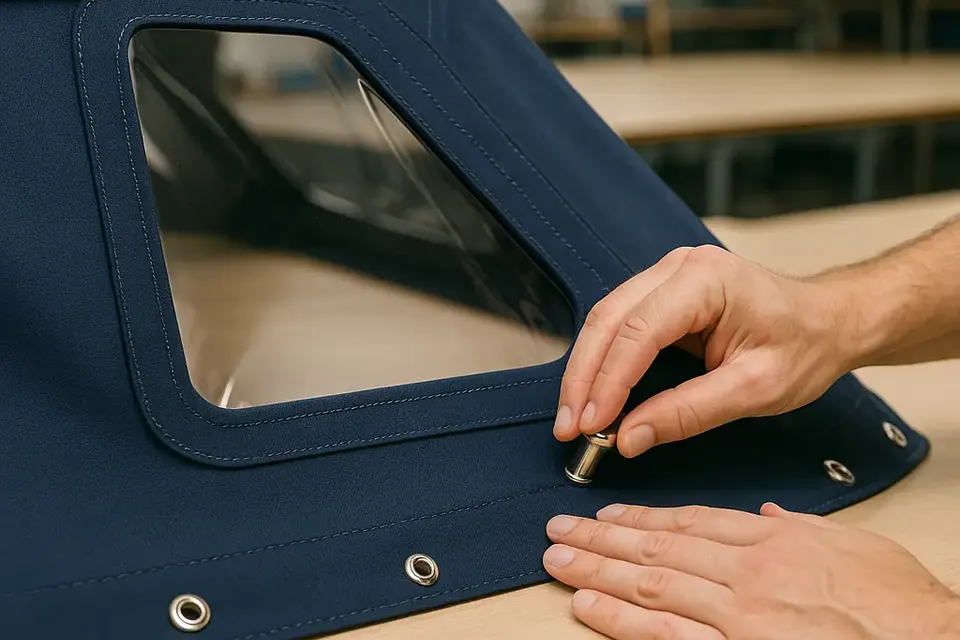
Our bespoke boat cover service serves Little Venice moorings through our convenient postal collection and delivery system—no VAT charges on all orders. Whether you need replacement tonneau covers after London's harsh winter or new spray hoods for summer cruising, simply send your old cover for exact reproduction in marine-grade materials. We understand Little Venice boats often feature custom colors and styling requiring precise matching—our pattern-copying method ensures perfect aesthetic integration.
Seasonal Patterns
Spring: March through May brings boat owners back to their vessels after winter, often discovering cover wear requiring replacement. Cherry blossoms from nearby trees create beautiful scenes but deposit sticky residue on covers.
Summer: June through August sees peak activity, with boats cruising daily to Camden, Regent's Park, and beyond. UV exposure from London's surprisingly strong summer sun degrades unprotected canvas.
Autumn: September and October offer pleasant cruising conditions with fewer tourists. Many owners replace covers before winter, preparing for months of weather exposure.
Winter: November through February presents wet, cold conditions. Quality winter covers prove essential for boats left on moorings, protecting against frost damage and ensuring spring readiness.
Cruising Routes from Little Venice
Camden Lock Circuit: East on Regent's Canal through Regent's Park Tunnel (277 yards) to Camden Lock, returning same route (2-3 hours, no locks until Hampstead Road).
Limehouse Basin: Complete Regent's Canal through 12 locks including the dramatic Islington Tunnel (960 yards), reaching Thames at Limehouse (full day, 12-14 locks one-way).
Bulls Bridge: West via Paddington Arm to Bulls Bridge Junction, passing industrial heritage sites and Kensal Green Cemetery (4-5 hours, no locks).
Warwickshire Ring: Via Paddington Arm and Grand Union Canal to join the popular Warwickshire Ring circular route (1-2 weeks).
Each route demands different cover configurations—extended cruising requires robust, weather-resistant covers while day trips allow lighter, more decorative options.
Community and Culture
Little Venice maintains an active boating community centered on the Inland Waterways Association's Paddington Branch and local mooring associations. The Canal Cavalcade Trust coordinates the annual May festival, while the Friends of Regent's Canal organize regular clean-up efforts and improvements.
The Waterway Recovery Group occasionally runs work parties improving facilities, though Little Venice's managed environment requires less volunteer effort than rural canal sections. The community's focus tends toward cultural events, canal-related art, and preserving the area's unique heritage character.
Long-Term Mooring Opportunities
Securing a Little Venice mooring represents a significant achievement in the narrowboat world. Residential moorings come available through several routes:
Canal & River Trust Moorings: Limited spots with waiting lists measured in years. Require boats to meet strict maintenance standards and insurance requirements.
Private Moorings: Occasionally available through property sales or mooring license transfers. Command premium prices reflecting the location's desirability.
Marina Berths: Nearby Paddington Basin offers marina-style berths with security and services, though at premium rates.
Regardless of mooring type, comprehensive boat covers prove essential investments. London's urban environment—pollution, weather, and constant activity—accelerates cover degradation compared to rural locations. Our postal service provides Little Venice boat owners with convenient cover replacement: send your old cover, receive an exact marine-grade replica according to the agreed schedule, all without VAT charges.